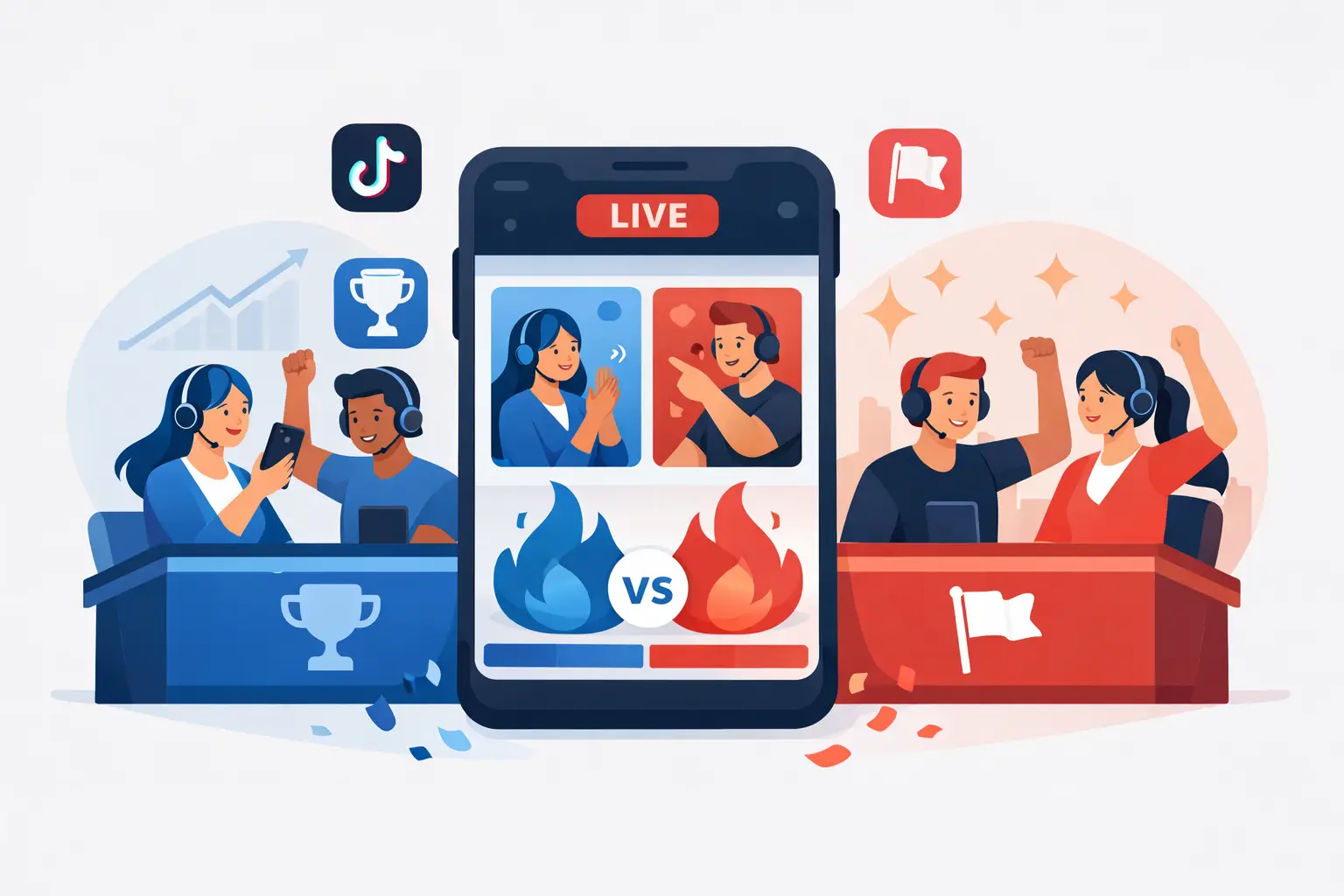
The fastest way to kill a TikTok LIVE is to let viewers sit there with nothing to fight for. If you want to run TikTok LIVE team competitions that actually spike gifts, comments, and watch time, you need more than a scoreboard and a vague challenge. You need clear teams, visible stakes, fast feedback, and enough chaos to keep people choosing sides.
Team competitions work because they give viewers a job. They are not just watching your stream. They are pushing their side forward, protecting a lead, trying to steal momentum, and dragging their friends into the battle. That shift matters. Passive viewers scroll. Active viewers stay.
Why TikTok LIVE team competitions hit harder
A solo gift goal can work for a while, but it gets predictable. Team play changes the energy. The moment chat splits into red versus blue, left side versus right side, captains versus captains, the live gets a story.
That story drives behavior. People gift faster when they feel their action changes the outcome right now. They comment more when they are defending their team. They stay longer because a comeback can happen in seconds. Competition creates tension, and tension keeps the room alive.
There is a trade-off, though. If your format is messy, team battles can confuse new viewers and stall momentum. The fix is simple. Keep the rules obvious, the visuals immediate, and the reward loop short.
How to run TikTok LIVE team competitions without losing the room
The best competitions are easy to understand in under ten seconds. A viewer joins, sees two sides, sees progress moving in real time, and knows exactly what to do next. If they need a full explanation, you already lost speed.
Start with a simple structure. Two teams usually beat four. Short rounds usually beat long marathons. A clear win condition usually beats layered mechanics. If your audience is new to gift-driven interaction, make the first round almost impossible to misunderstand.
Pick a format that creates instant rivalry
Good formats are built around visible conflict. Team versus team is the obvious choice, but the setup can vary depending on your audience. Some creators let viewers choose a side in chat and support it with gifts. Others assign teams based on captains, characters, or themes. If your community already has strong inside jokes, use them. Familiar identity makes people commit faster.
The key is to avoid dead air between action and reaction. When a gift lands, something on screen should happen right away. That can be progress, damage, defense, movement, or a swing in the standings. The more immediate the response, the stronger the feedback loop.
Make the rules stupid simple
This is not the place for a long speech. Say the objective in one sentence. Repeat it often. Pin it if needed. Then keep calling the action as it happens.
For example, if Team Red needs to knock down Team Blue's tower before the timer ends, say that. If roses move one point and bigger gifts trigger bigger attacks, say that too. Done. Now the room knows how to play.
Complicated rules can be fun for loyal viewers, but they slow down conversion for first-time visitors. If you want better gifting velocity, clarity beats creativity early. You can always add twists in later rounds once the audience understands the core loop.
Build the stream around momentum, not just mechanics
A lot of creators focus too much on the game object and not enough on the show. The competition is the engine, but your reaction is the fuel. Team competitions need commentary, hype, pressure, and a little controlled panic.
Call out swings the second they happen. Celebrate small pushes. Shame a leading team just enough to wake up the losing side. If one team is dominating, do not act like the result is settled. Push the comeback angle. Viewers love a rescue mission.
This is where interactive tools can change the game. Products built for TikTok LIVE mechanics make gifts feel physical. Instead of gifts disappearing into the usual flow, they become visible attacks, movement, progress, or disruption. That is a big difference. It gives the audience proof that their support is doing something, not just being counted.
Use short rounds to keep urgency high
Long battles can work if your audience is already locked in, but short rounds are usually stronger for retention. A three to five minute showdown creates urgency without exhausting the room. It also gives new viewers more chances to join a fresh match instead of arriving halfway through something that feels decided.
Short rounds give you better pacing. You can reset teams, introduce a revenge round, swap captains, or raise the stakes after a close finish. That rhythm keeps the stream from flattening out.
If a round turns into a blowout, cut it early and restart with a twist. Protect the energy first. Rules exist to serve the entertainment, not the other way around.
The tech side matters more than people admit
Nobody in your chat cares how your setup works. They care whether it works now. If the competition lags, breaks, or needs constant explaining, viewers lose trust fast.
That is why control matters. You want a system that lets you activate game experiences quickly, manage access cleanly, and keep the live moving without getting buried in setup. For creators managing one channel and for agencies managing many, speed behind the scenes is what makes the front end feel exciting instead of clunky.
A centralized admin setup helps because it removes friction. You can control who gets access, how long they can use it, and which live game is active without turning every stream into a technical project. That matters when you are trying to keep momentum high night after night.
What makes viewers actually join a team
People do not join because you told them to. They join because the choice feels fun, visible, and a little tribal. Team identity is a huge lever here.
Names help. Colors help. Captains help even more. If viewers are backing a creator, mod, guest, or recognizable character, they commit faster. It feels personal. That emotional hook turns a basic competition into a loyalty battle.
Rewards also matter, but not always in the obvious way. The winning team does not need a huge prize. Often, recognition, bragging rights, or a silly punishment for the losing side is enough. The point is to make the outcome feel worth caring about.
Be careful with rewards that slow the stream down. If every round ends with a long payout, explanation, or off-topic detour, your momentum leaks away. Keep the reward visible and fast.
How to keep team competitions from getting repetitive
Even a strong format gets stale if you run it the same way every night. The trick is not to rebuild the whole thing. Just rotate the pressure points.
Change the objective sometimes. One night, teams race upward. Another night, they attack each other. Another night, they defend a shared target while competing for MVP status. The core idea stays familiar, but the viewer's role feels fresh.
You can also rotate the emotional frame. Run a revenge match after a close loss. Run a captain challenge. Run a sudden death final round with boosted impact. Little changes create new reasons to stay.
This is where a focused product suite helps. If you can switch between different gift-driven experiences without changing your whole workflow, you keep variety high without adding chaos behind the scenes. StreamLive is built around that exact need - real-time interaction for the audience, simple control for the operator.
Mistakes that quietly kill the competition
The biggest mistake is making the game harder to understand than the hype around it. If your viewers are asking what is happening instead of reacting to what is happening, your loop is too weak.
The second mistake is poor pacing. Dead space between rounds, slow reactions, and overlong explanations all kill urgency. Team competitions live on speed. Keep the next reason to act close at all times.
The third mistake is ignoring imbalance. If one team wins too easily over and over, the room stops believing in the battle. You do not need fake results, but you do need formats that allow pressure swings, comeback moments, and enough volatility to keep both sides engaged.
Finally, do not make every moment about hard selling gifts. The competition should naturally pull gifting behavior out of the audience. Your job is to frame the rivalry, react to the action, and keep the pressure on. If the mechanic is fun, viewers will do the rest.
Run the show like a host, not just a streamer
The creators who win with team competitions understand something simple. You are not just broadcasting. You are directing a live contest with an audience that wants to matter.
That means your voice matters. Your timing matters. Your ability to turn a small swing into a huge moment matters. The tools create the action, but the host creates the reason people care.
If you want stronger TikTok LIVE sessions, stop asking viewers to watch harder. Give them a side to fight for, a way to change the screen, and a reason to come back for the rematch.