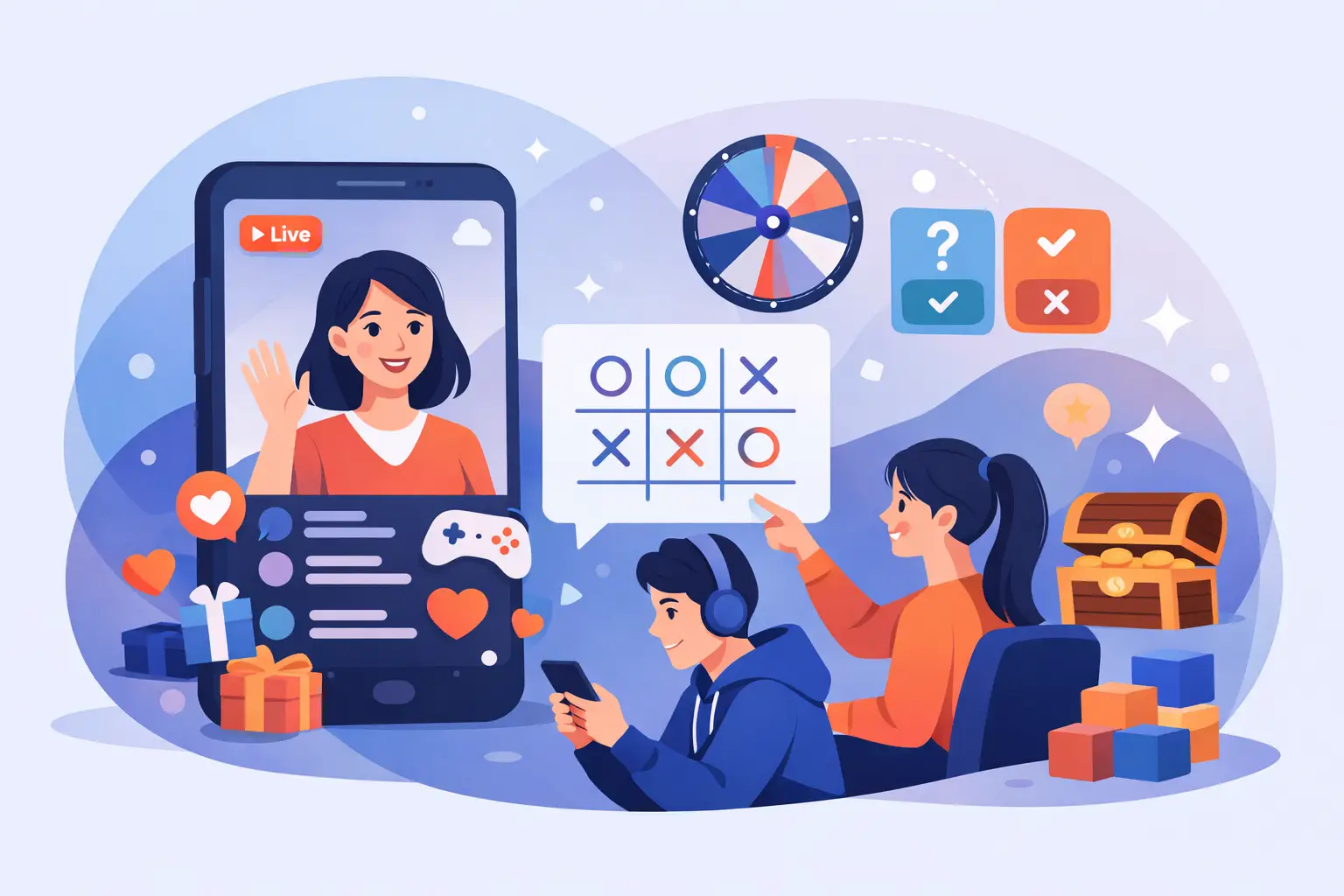
If your TikTok LIVE feels flat after the first five minutes, the problem usually is not your personality. It is the format. Viewers need a reason to tap, gift, choose sides, and come back for the next round. That is exactly why creators keep asking how to do TikTok LIVE interactive games - because passive chat does not create the same pressure, chaos, or momentum as a live game that reacts in real time.
The good news is you do not need to turn your stream into a full production. The best interactive games on TikTok LIVE are simple to understand, fast to react to, and built around one thing: viewers can affect what happens on screen. When people feel like their gift, vote, or team choice actually changes the outcome, engagement stops being random. It becomes a contest.
What makes TikTok LIVE interactive games work
A lot of streamers overcomplicate this. They think they need a giant ruleset, custom graphics, or ten different prize tiers. Usually, that kills the energy. The strongest game formats are easy enough for a brand-new viewer to understand within seconds.
Interactive games work because they create visible stakes. One gift pushes a team forward. Another gift blocks an opponent. A chat decision triggers a punishment, a challenge, or a sudden twist. That reaction loop matters more than the theme of the game itself.
You are not just entertaining viewers. You are giving them control. That control creates rivalry, and rivalry creates repeat behavior. People stay longer when they think, "We can still win this." They gift more when a match feels close. They come back when they remember the chaos from last time.
How to do TikTok LIVE interactive games without losing the room
Start with one clear mechanic. Not three. Not five. One.
For example, viewers can split into two teams and send specific gifts to move their side forward. Or they can protect a character, attack a tower, or grow a score bar. The point is clarity. If someone joins late, they should understand the objective almost immediately.
Then set a visible win condition. A race to the top, survival until the timer ends, the first team to break a barrier, or the player with the most points after three rounds all work. What does not work is a game that drifts with no ending. TikTok LIVE rewards urgency. If there is no finish line, people lose interest.
After that, build your reaction moments. This is where many streams either pop off or stall. Every gift or audience action should do something obvious. Maybe a crop grows, a platform rises, or a team ball charges ahead. The more immediate the result feels, the more likely people are to trigger it again.
Finally, keep your host energy tied to the game, not separate from it. Too many streamers run a game in the background while talking about unrelated stuff. If the game is the engine, your commentary should feed it. Call out close scores. Push team rivalries. Hype comeback moments. Turn every shift into a story.
The best formats are built for fast participation
If you want better gifting momentum, choose formats that reward instant decisions. Team battles are especially strong because they make viewers pick a side. The second someone chooses red team or blue team, they are emotionally invested. They are no longer just watching. They are defending something.
Race formats also work well because progress is easy to read. People instantly understand who is winning, who is falling behind, and what it takes to change the outcome. Survival formats can be strong too, but only if the threat is constant. If the danger feels slow or abstract, the pressure disappears.
Some creators do well with punishment-based games, where chat or gifts trigger dares, challenges, or consequences. These can be powerful for personality-driven streams, but there is a trade-off. They rely heavily on the host being entertaining enough to carry every reaction. If your goal is scalable, repeatable interaction, visual competitive formats are usually easier to run consistently.
How to set up a stream people actually join
Before you go live, decide three things: the game loop, the audience action, and the reward for winning. That is your entire foundation.
The game loop is what repeats. Team pushes, point scoring, defending, climbing, surviving. The audience action is what causes movement, whether that is a gift, token, or simple participation trigger. The reward can be symbolic, funny, or creator-led. Maybe the losing side gets roasted. Maybe the winner gets a shoutout or chooses the next challenge. It does not need to be huge. It just needs to matter in the moment.
Your opening minute is critical. Do not ease into it. Launch with tension. State the rules fast, announce the teams, and make the first push happen immediately. People decide very quickly whether a LIVE is worth staying in. If the game does not start fast, you lose that first wave.
It also helps to repeat the rules naturally as the stream goes on. TikTok LIVE has constant turnover. New viewers are arriving every minute. You do not need a long explanation every time. A short, high-energy reminder is enough: red team is chasing blue, gifts push the score, winner takes the round.
Tools matter because manual games break momentum
You can run a basic interactive game manually, but manual control gets messy fast. Once gifting speeds up, trying to track actions yourself can slow the stream down and kill the illusion of instant impact. That is where dedicated TikTok LIVE game tools make a difference.
A good setup should let you manage access, launch a game quickly, monitor what is active, and switch formats without adding friction. That is especially important if you manage multiple creators or accounts. The more chaos you create on screen, the more control you need behind the scenes.
This is where a platform like StreamLive fits naturally. Instead of forcing creators to stitch together random gimmicks, it gives them a central control system for interactive products built around TikTok LIVE behavior. That matters because the best live games are not just fun. They are repeatable, manageable, and easy to activate when it is time to turn the room up.
How to keep the energy high after the first round
The first round gets attention. The second and third rounds build retention.
Once a game works, do not stretch one match too long. Short rounds usually hit harder because they create more resets, more winners, and more chances for revenge. If one side gets crushed early and the game drags on, viewers on the losing side may stop participating. Shorter rounds keep hope alive.
Use momentum swings on purpose. Announce comeback windows. Add sudden-death endings. Reset teams. Let winners defend their title. The goal is not fairness in a strict sense. The goal is keeping the room emotionally active.
You should also vary the pressure across a stream. If everything is maximum chaos all the time, viewers can burn out. Alternate between explosive rounds and quick resets where you tease the next matchup, call out top supporters, or let chat choose the next mode. That rhythm helps the stream breathe without going flat.
Common mistakes when doing TikTok LIVE interactive games
The biggest mistake is making the game harder to understand than the stream itself. If viewers need a full explanation before they can join, the format is too complicated.
The second mistake is weak feedback. When someone participates, they need to see an effect right away. If the response is delayed or unclear, the action feels pointless.
The third mistake is treating every viewer the same. In reality, different streams need different game styles. A loud, rivalry-heavy creator may thrive with team competitions. A calmer host might do better with lighter progression games that build over time. It depends on your audience behavior, not just what looks cool on another account.
There is also the issue of overusing one format. Even a strong game can go stale if it becomes your only trick. The smart move is rotation. Keep one or two core formats that viewers recognize, then switch the visual or competitive angle often enough to keep the room guessing.
How to know if your game is working
Do not judge success only by total gifts. Watch what happens to retention, chat activity, repeat participation, and mid-stream energy. A strong interactive game keeps people from drifting. It gives them a reason to stay through the next round and a reason to rejoin tomorrow.
Look for the moments when viewers start talking to each other, not just to you. That is when the game becomes bigger than the host. Team trash talk, comeback hype, score watching, and rivalry between repeat viewers are all strong signs that your format is doing its job.
If you see lots of early viewers but weak participation, your mechanic may not be clear enough. If people play one round and leave, your pacing may be too slow. If only a few users carry the action every time, your game may need lower-friction entry points so more viewers can join the fun.
The sweet spot is simple: viewers understand it fast, affect it instantly, and care who wins.
TikTok LIVE gets exciting when the audience stops acting like an audience. Give them a side to defend, a score to chase, and a reason to hit back, and your stream stops feeling like background noise. It starts feeling like a live event people want to be part of again.